Finding a reliable sewing machine for home use can be surprisingly difficult. Some machines look affordable but offer limited stitching options, while others come with so many features that beginners feel overwhelmed before making their first stitch.
The Usha Janome Dream Stitch Automatic Zig-Zag Electric Sewing Machine to offer a practical middle ground. It combines basic and decorative stitching functions, a compact design, and useful features for everyday clothing repairs and home sewing projects.
Whether you want to shorten trousers, repair a torn kurta, stitch pillow covers, or learn garment making, this machine deserves consideration.
But is the Usha Janome Dream Stitch actually worth buying in 2026? Can it handle different fabrics? Is it easy enough for someone who has never used an electric sewing machine?
View the latest Amazon India listing, seller details, and customer feedback.
Usha Janome Dream Stitch Sewing Machine: Product Overview
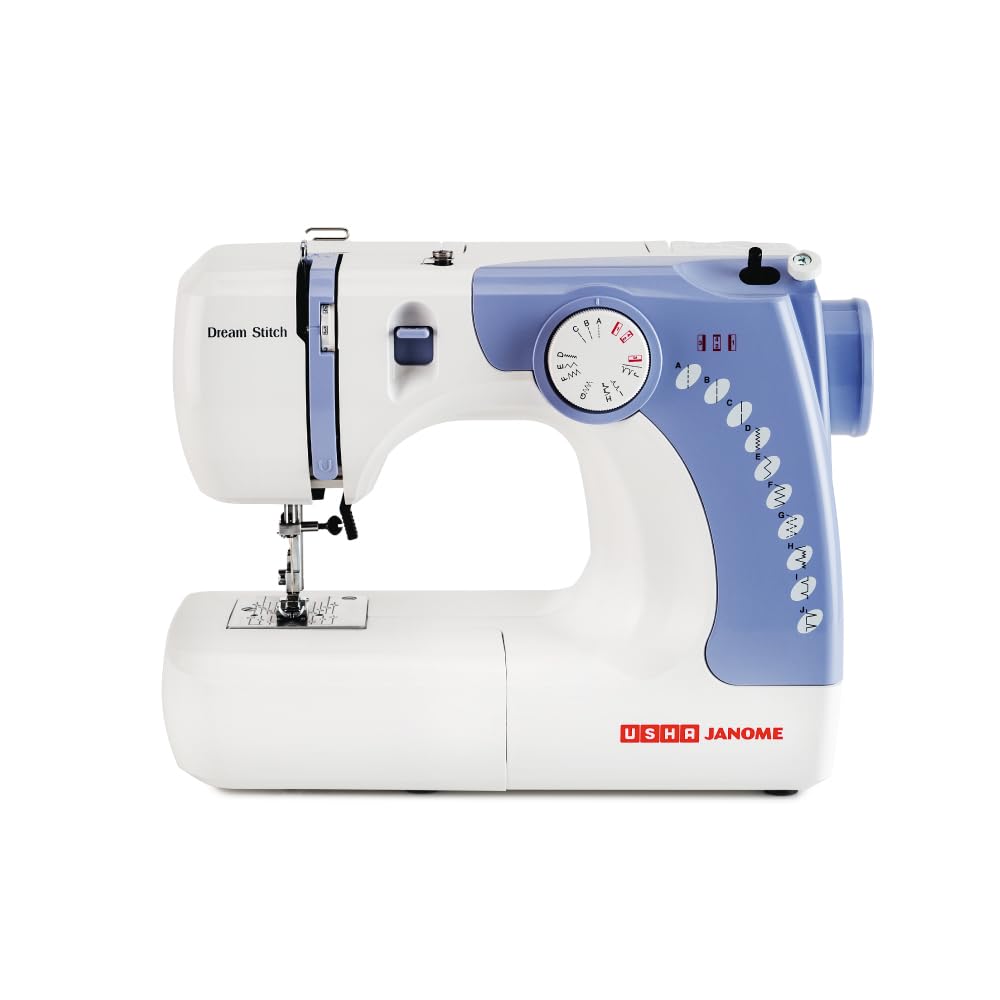
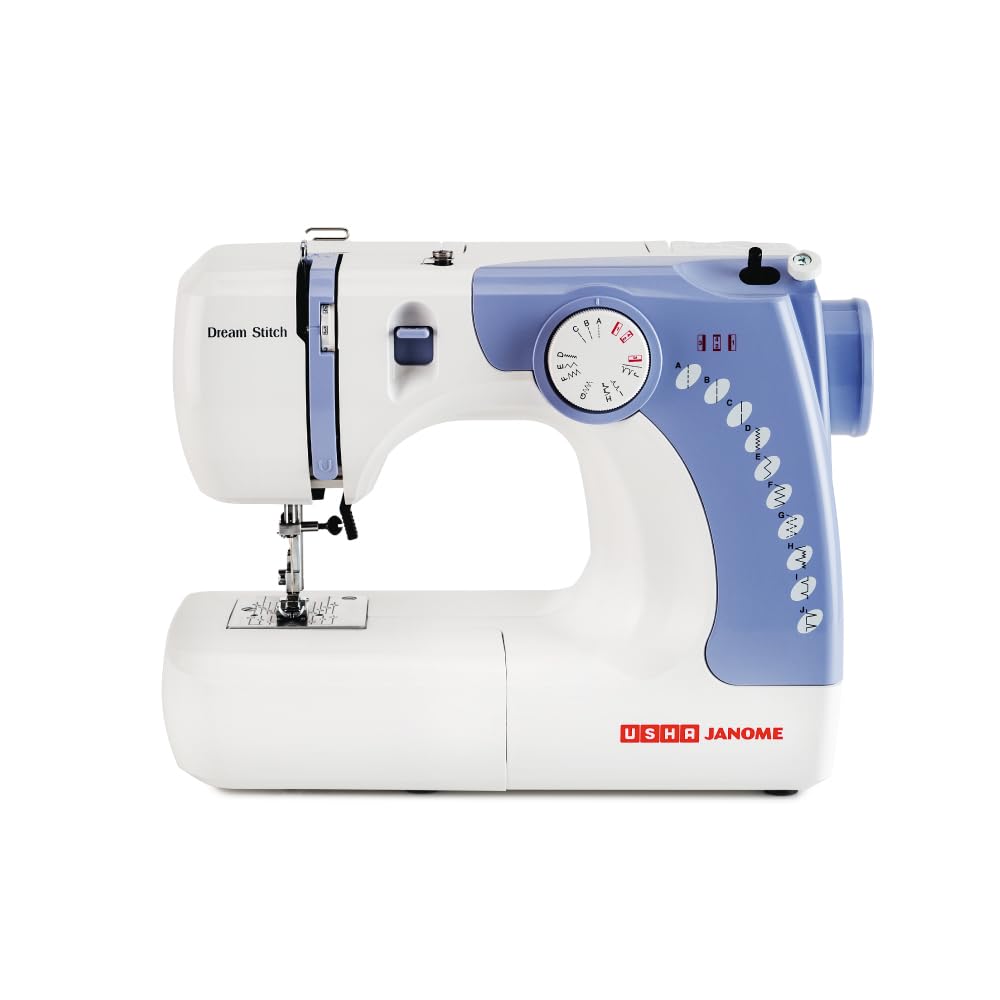
The Usha Janome Dream Stitch is a compact, electrically operated zig-zag sewing machine designed primarily for household sewing, alterations, and basic creative projects.
Unlike a traditional straight-stitch-only machine, it provides multiple built-in stitch patterns and adjustable stitching controls. This gives home users more flexibility when working on different types of sewing tasks.
Its white-and-blue body has a relatively compact footprint, making it suitable for homes where a dedicated sewing room is not available.
Key Specifications
- Brand: Usha
- Model: Janome Dream Stitch
- ASIN: B00E9OFCZQ
- Machine type: Automatic zig-zag electric sewing machine
- Built-in stitches: 7, including a four-step buttonhole function
- Stitch selection: Manual pattern-selection dial
- Sewing arm: Compact free-arm design
- Stitch adjustment: Stitch-length control
- Bobbin system: Auto-tripping bobbin-winding system
- Additional functionality: Drop-feed mechanism for suitable free-motion work
- Lighting: Built-in sewing light
- Power source: Corded electric
- Approximate weight: 5.9 kg
- Manufacturer’s stated warranty: 2 years, subject to applicable terms
One important detail is that different online product descriptions provide inconsistent information about sewing speed and needle-threading automation. Some listings mention 550 stitches per minute, while older descriptions mention 860 stitches per minute. Similarly, descriptions differ on whether needle threading is automatic or manual.
Buyers should confirm these details for the exact unit being sold rather than assuming every listing describes the same configuration.
Overall, the Dream Stitch offers a useful collection of household sewing functions without the complexity of a computerized machine.
Key Features of the Usha Janome Dream Stitch Sewing Machine
1. Seven Built-In Stitches for Everyday Sewing
One of the biggest advantages of this Usha electric sewing machine is its selection of seven built-in stitches.
For someone upgrading from a basic straight-stitch machine, having additional stitch options can make everyday sewing more convenient.
Straight stitches are useful for joining fabric pieces and making basic repairs. Zig-zag stitching can help finish certain raw edges, attach elastic, and complete other tasks where a straight stitch is not ideal.
The machine also supports decorative and utility sewing applications.
However, seven built-in stitches should not be confused with dozens of separate decorative patterns. This is a relatively simple mechanical machine, not a feature-heavy computerized model.
For regular household sewing, that simplicity may actually be an advantage.
2. Four-Step Buttonhole Function
Making buttonholes manually can be challenging, particularly for beginners.
The Usha Janome Dream Stitch includes a four-step buttonhole function that helps users create buttonholes using a guided stitching sequence.
This feature is useful when making or repairing shirts, kurtas, children’s garments, and other clothing with buttons.
However, four-step buttonholing requires more user involvement than a one-step automatic buttonhole system.
You need to follow the correct sequence, position the fabric carefully, and practise maintaining consistent buttonhole dimensions.
Beginners should test the process on spare fabric before sewing buttonholes directly onto a finished garment.
3. Compact Free-Arm Design
The free-arm design is particularly useful for sewing smaller, circular sections of clothing.
For example, stitching around a shirt sleeve or repairing the bottom of a trouser leg can be awkward on a flat sewing surface.
The free arm allows certain tubular garment sections to fit around a narrower part of the machine, improving access to the stitching area.
This can make the Dream Stitch practical for:
- Trouser and jeans alterations
- Sleeve repairs
- Children’s clothing
- Narrow garment openings
- Small household sewing projects
It does not guarantee that every thick seam will pass easily under the presser foot, but it makes positioning many garments more convenient.
4. Simple Dial-Based Stitch Selection
The machine uses a mechanical dial to select stitching patterns.
This is a welcome feature for users who prefer straightforward controls instead of digital menus or complicated settings.
Once you understand the symbols and available patterns, switching between suitable stitch types becomes relatively simple.
There is still a learning curve. You need to understand thread tension, stitch length, needle choice, and fabric feeding to achieve consistent results.
Nevertheless, the dial-based interface is approachable for beginners who want to learn practical sewing skills.
5. Adjustable Stitch Length and Thread Tension
Different sewing projects require different stitch settings.
Shorter stitches may be useful for certain detailed seams, while longer stitches are commonly used for basting and some heavier fabrics.
The Dream Stitch provides stitch-length adjustment, giving users control over how stitches are formed.
Thread tension is adjusted manually.
Correct tension is important because poorly balanced tension can cause puckering, loose stitches, or thread loops.
A useful beginner habit is to test your chosen settings on a leftover piece of the same fabric before starting the actual project.
6. Drop-Feed Function for Creative Sewing
The drop-feed feature allows the fabric-feeding mechanism to be disengaged for suitable free-motion applications.
This can be useful for creative stitching and certain embroidery-style projects.
However, free-motion sewing requires practice and appropriate accessories or setup. The presence of a drop-feed mechanism does not make the Dream Stitch equivalent to a dedicated embroidery machine.
For someone interested in experimenting with basic decorative work, it is a useful feature to have.
7. Built-In Sewing Light
Good visibility matters when sewing, especially when working with dark thread, small seams, or detailed garment sections.
The built-in sewing light illuminates the needle area, helping users see their stitching more clearly.
It is a practical addition, although a separate desk lamp may still be helpful for larger projects or poorly lit rooms.
Usha Janome Dream Stitch Stitching Performance: What Can It Handle?
A sewing machine’s real value comes from how well it performs on the fabrics and projects you actually use.
The Dream Stitch is primarily designed for domestic sewing rather than continuous industrial tailoring.
Cotton and Everyday Clothing Fabrics
Cotton is a sensible starting point for beginners because many woven cotton fabrics are relatively easy to position, feed, and stitch.
The Dream Stitch’s straight and zig-zag functions make it suitable for ordinary cotton sewing tasks, including simple garments, pillow covers, fabric bags, and clothing repairs.
For best results, choose an appropriate needle and thread combination and avoid pulling the fabric while stitching.
The machine’s adjustable settings help users adapt to different sewing requirements.
Lightweight and Delicate Fabrics
Lightweight fabrics such as thin cotton, lining materials, and some synthetic textiles can be sewn with appropriate preparation.
However, delicate materials may require a finer needle, suitable thread, and careful tension adjustment.
Thin fabric can wrinkle or gather if the stitch settings are incorrect.
Beginners should practise on scraps before working with expensive or delicate material.
The machine is capable of basic lightweight-fabric sewing, but success depends on the user’s technique as much as the machine itself.
Denim and Thick Fabrics
Can the Usha Janome Dream Stitch sew jeans?
This question deserves a careful answer.
Some ordinary denim alterations may be possible with an appropriate needle, correct settings, and careful handling. However, the Dream Stitch should not be treated as a heavy-duty denim sewing machine.
Multiple layers of thick denim, bulky folded seams, leather, and upholstery materials can place considerable strain on a domestic sewing machine.
Trying to force thick material through the machine may result in skipped stitches, broken needles, or feeding problems.
If you mainly want to alter lightweight trousers and occasionally repair denim, the Dream Stitch may be worth considering.
If your primary work involves thick jeans, heavy canvas, or upholstery, a purpose-built heavy-duty machine is a better option.
Stretch and Knitted Fabrics
Zig-zag stitching can be useful when working with certain stretch fabrics because it allows some flexibility in the seam.
However, successful stretch-fabric sewing also requires an appropriate needle, thread, and stitch setting.
The Dream Stitch is not a replacement for an overlocker or specialized knitwear machine.
For occasional simple stretch-fabric repairs, it may be adequate. For regular professional knitwear construction, more specialized equipment would be preferable.
Interested in a compact sewing machine for household alterations?
View the latest Amazon India listing, seller details, and customer feedback.
Is the Usha Janome Dream Stitch Easy to Use for Beginners?
For first-time buyers, ease of use is often more important than having a large collection of decorative stitches.
The Usha Janome Dream Stitch offers a relatively simple mechanical control system, making it an approachable option for people learning home sewing.
Setting Up the Machine
Before beginning, users need to learn how to wind and insert the bobbin, thread the machine, position the fabric, and select the appropriate stitch.
These tasks can initially seem complicated, especially for someone moving from hand sewing to an electric machine.
The instruction manual should be the first reference for threading and bobbin installation. Incorrect threading is a common cause of sewing difficulties, even when the machine itself is working properly.
It is sensible to practise on plain cotton before attempting alterations on valuable clothing.
Learning to Control Sewing Speed
An electric sewing machine requires coordination between fabric guidance and foot-pedal control.
New users may initially struggle to maintain an even sewing speed or follow a straight seam.
The best approach is to begin slowly, practise on fabric scraps, and gradually work on more complicated stitching tasks.
The Dream Stitch’s mechanical design provides the basic controls needed to develop these skills.
Cleaning and Maintenance
Regular maintenance is important for consistent stitching performance.
Lint and loose thread can accumulate around the bobbin and needle area, particularly after working with fabrics that shed fibres.
Users should follow the manufacturer’s instructions for cleaning, needle replacement, and lubrication, where applicable.
Avoid applying oil to parts unless the manual specifically recommends it.
Proper maintenance can help reduce avoidable stitching problems and extend the machine’s useful life.
Usha Janome Dream Stitch Pros and Cons
Every sewing machine has strengths and limitations. Understanding both helps you make a realistic buying decision.
Pros
- Seven built-in stitches cover many common household sewing tasks.
- Four-step buttonhole functionality adds versatility.
- Compact free-arm design is useful for sleeves and trouser alterations.
- Mechanical stitch-selection dial is straightforward.
- Adjustable stitch length provides flexibility.
- Built-in sewing light improves needle-area visibility.
- Drop-feed functionality supports suitable creative stitching.
- Manageable size makes it practical for home storage.
- Suitable for learning basic garment construction and alterations.
Cons
- Not designed for continuous industrial sewing.
- Limited stitch variety compared with advanced computerized machines.
- Four-step buttonholes require manual operation.
- Thick denim and multiple heavy fabric layers may be challenging.
- Beginners must learn threading and tension adjustment.
- Some online descriptions contain inconsistent specifications.
- Accessories and bundled sewing kits may vary between sellers.
The main takeaway is that the Dream Stitch prioritizes practical household functionality rather than advanced automation.
Usha Janome Dream Stitch Customer Reviews: What Do Buyers Say?
Customer feedback is an important part of evaluating any sewing machine, particularly because long-term reliability cannot be determined from specifications alone.
Accessible product records for ASIN B00E9OFCZQ show an overall customer rating around 4.2 out of 5 stars, although the number of ratings differs between sources and may change over time.
This suggests generally favourable customer satisfaction, but an average rating does not tell the complete story.
Individual Amazon review texts could not be reliably verified in sufficient detail for a defensible review-by-review analysis. Therefore, the following discussion separates observable product characteristics from issues buyers should investigate, rather than presenting unverified complaints as established customer trends.
What Makes This Machine Appealing?
The most compelling aspects of the Dream Stitch are its combination of household sewing functions, compact design, and relatively simple mechanical operation.
For users who mainly want to repair garments, make basic clothing, or practise sewing, these features are more relevant than having dozens of decorative patterns.
The free arm and zig-zag stitching options are particularly useful advantages over simpler straight-stitch-only machines.
Common Concerns Worth Checking
Before purchasing, pay particular attention to recent customer reviews discussing:
- Thread breaking, skipped stitches, or bobbin-related difficulties
- Performance on denim and multiple fabric layers
- Delivery condition and missing accessories
- Availability of installation demonstrations or training
- Warranty service and repair support
- Long-term reliability after regular use
These are useful areas to investigate, not verified complaint frequencies for this particular model.
A negative review describing thread breakage may reflect a machine defect, incorrect threading, unsuitable needles, or tension settings. Similarly, one positive review cannot establish long-term durability.
Read recent verified-purchase reviews, compare feedback from experienced and beginner users, and look for repeated, specific descriptions of the same problem.
Who Should Buy the Usha Janome Dream Stitch?
Beginners Learning Sewing
The Dream Stitch is a reasonable choice for beginners who want to develop practical sewing skills.
Its mechanical controls and basic stitch options provide opportunities to learn essential techniques without investing immediately in an expensive computerized model.
Homemakers and Occasional Users
People who regularly repair clothing, shorten trousers, stitch pillow covers, or make simple household items may find the machine useful.
Its compact design is particularly appealing when sewing space is limited.
Hobby Sewing Enthusiasts
The machine can also suit hobbyists interested in basic garment making, decorative stitching, and small creative projects.
However, users who want extensive embroidery patterns or sophisticated automation may eventually outgrow its capabilities.
Who Should Consider Another Machine?
The Dream Stitch is less suitable for professional tailors handling large daily workloads, people regularly sewing heavy upholstery, or buyers who need advanced computerized features.
For those users, a machine specifically designed for heavier or more demanding sewing is likely to offer better long-term value.
Considering the Usha Janome Dream Stitch for your home?
View the latest Amazon India listing, seller details, and customer feedback.
Frequently Asked Questions About the Usha Janome Dream Stitch
1. Is the Usha Janome Dream Stitch good for beginners?
Yes. Its mechanical stitch selection, basic sewing functions, and compact design make it a reasonable option for beginners willing to learn threading, tension adjustment, and fabric handling.
2. How many stitches does the Dream Stitch have?
The machine has seven built-in stitches, including a four-step buttonhole function.
3. Can it stitch jeans?
It may handle certain denim repairs with suitable needles and careful settings, but it is not a dedicated heavy-duty machine. Thick, multilayer denim seams can be difficult.
4. Does the Usha Janome Dream Stitch require electricity?
Yes. It is a corded electric sewing machine.
5. Can I use it for blouse and kurti stitching?
Yes. It is suitable for many basic blouse, kurti, and similar garment-sewing tasks, depending on fabric thickness, garment construction, and user experience.
6. Is the machine suitable for professional tailoring?
It is better suited to household and hobby sewing. Buyers planning continuous commercial use should consider a machine designed for higher workloads.
7. Does the machine come with a warranty?
Product descriptions state a two-year manufacturer’s warranty. Confirm the current warranty terms, seller eligibility, and service conditions before buying.
8. Is automatic needle threading included?
Online descriptions conflict on this feature. Check the exact Amazon listing or confirm with the seller before purchasing.
Final Verdict: Is the Usha Janome Dream Stitch Worth Buying in 2026?
The Usha Janome Dream Stitch Automatic Zig-Zag Electric Sewing Machine offers a practical combination of essential sewing functions, manageable size, and beginner-friendly mechanical controls.
Its seven built-in stitches, free-arm design, adjustable stitch length, and four-step buttonhole function make it a useful candidate for home sewing, clothing repairs, and basic garment construction.
Its limitations are equally important. This is not a heavy-duty industrial machine, and users expecting effortless stitching through thick denim or advanced embroidery capabilities should consider alternatives.
For someone learning to sew or handling occasional household alterations, the Dream Stitch is worth shortlisting. Its value ultimately depends on the current price, seller support, and whether its capabilities match your projects.
Final recommendation: Choose the Usha Janome Dream Stitch if your priority is a straightforward electric sewing machine for everyday fabrics and home alterations. Before ordering, verify the exact model specifications, included accessories, warranty coverage, and recent customer reviews.
View the latest Amazon India listing, seller details, and customer feedback.