Introduction
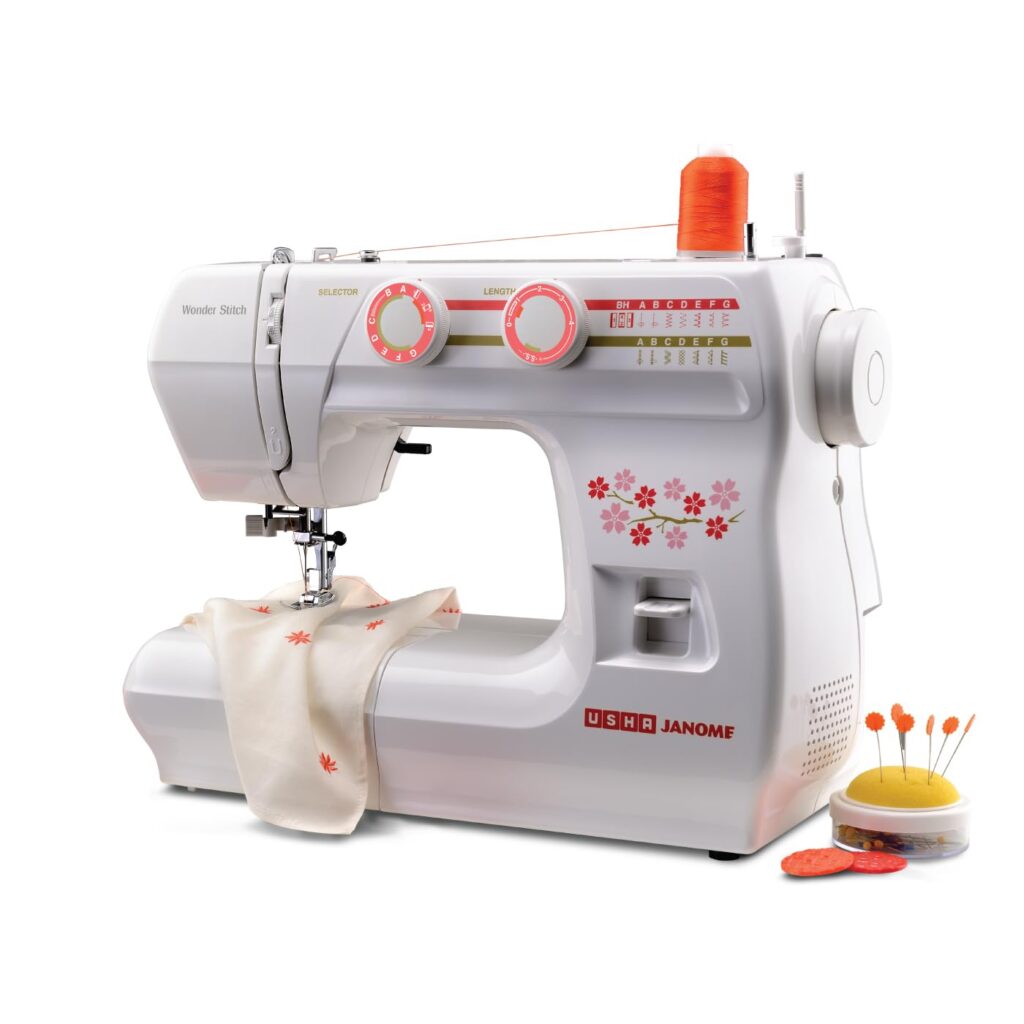
Choosing a sewing machine for home use can be confusing, especially if you want something more versatile than a basic straight-stitch machine without paying for an expensive computerized model. The USHA Janome Wonder Stitch Automatic Zig-Zag Sewing Machine is designed for people who want to handle everyday sewing, clothing alterations, creative projects, and decorative stitching at home.
This electric sewing machine combines traditional dial-based controls with practical features such as automatic needle threading, multiple stitch patterns, a built-in sewing light, and a feed-drop mechanism for embroidery work. It also supports applications such as button fixing, zip fixing, rolled hemming, blind hemming, and stretch stitching.
But does it make sense for beginners, regular home users, or people who sew frequently? And are its features enough to justify choosing it over a simpler sewing machine?
In this review, we examine the USHA Janome Wonder Stitch’s key features, stitching capabilities, ease of use, limitations, and available customer feedback. The goal is to help you decide whether this machine matches your sewing needs before purchasing it.
Product: USHA Janome Wonder Stitch Automatic Zig-Zag Sewing Machine
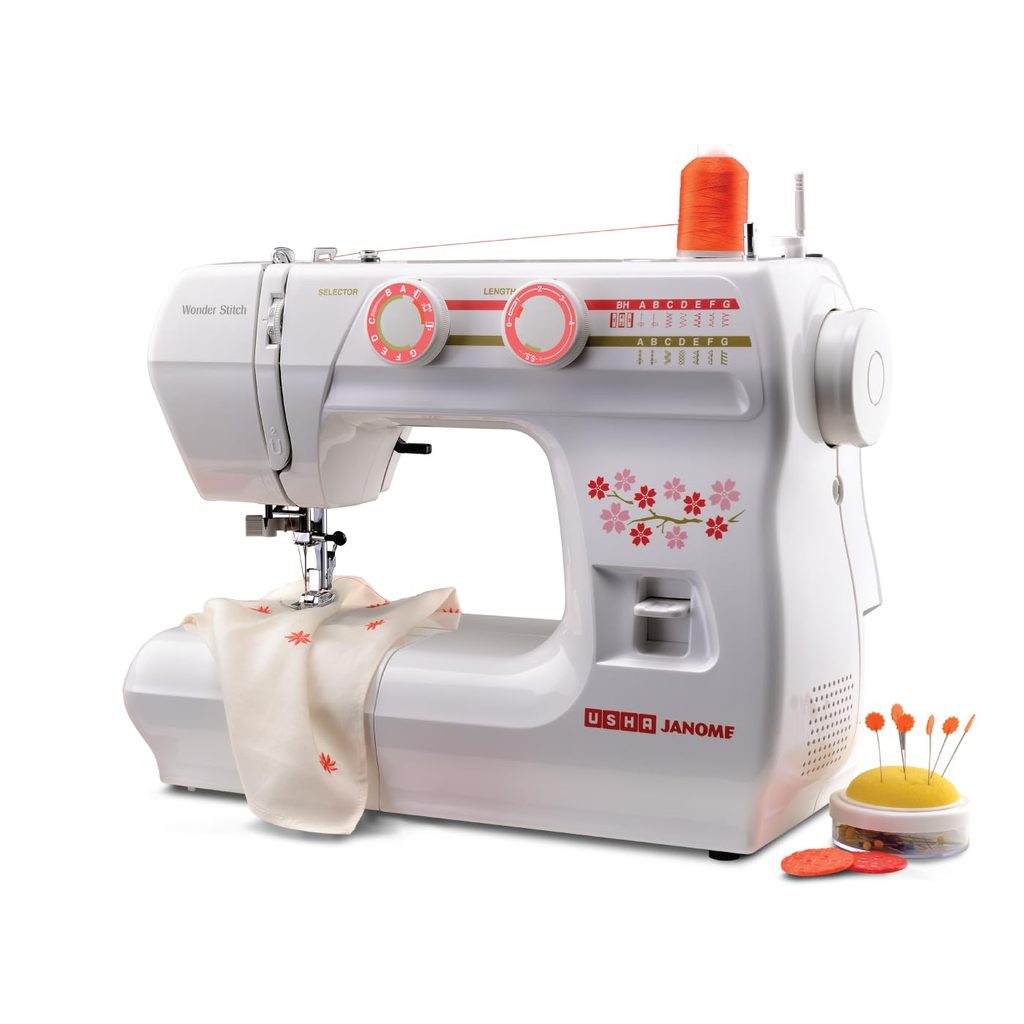
View the USHA Janome Wonder Stitch on Amazon India
USHA Janome Wonder Stitch: Key Features
The Wonder Stitch is an electric zig-zag sewing machine intended for a range of household sewing applications. Its main attraction is the combination of everyday stitching functions and a few features that make creative work easier.
1. Thirteen Built-In Stitches and 21 Stitch Functions
USHA lists 13 built-in stitches and 21 stitch functions for this model. These figures describe different aspects of its capabilities, so they should not be interpreted as 21 completely separate decorative stitch patterns.
The machine supports essential sewing as well as selected specialist applications. Depending on the stitch selected and the correct presser foot or setup, these applications can include:
- Straight stitching for seams and everyday repairs
- Zig-zag stitching for finishing fabric edges
- Stretch stitching for suitable stretch fabrics
- Button fixing
- Zip fixing
- Rolled hemming
- Blind hemming
- Smocking and decorative sewing
- Four-step buttonhole sewing
This range is useful for home users who want more flexibility than a straight-stitch-only machine offers. However, the Wonder Stitch is not a computerized machine with a large digital stitch library. Its selection is more traditional and relies on mechanical controls.
2. Automatic Needle Threader
Threading a sewing machine needle can be frustrating, particularly for beginners or anyone who struggles to see the small needle eye clearly.
The Wonder Stitch includes an automatic needle-threading mechanism designed to simplify this step. Once you learn the correct threading sequence, it can reduce the effort involved in preparing the machine.
It is worth remembering that an automatic threader is a mechanical aid, not a completely automatic setup system. You still need to thread the machine correctly, insert the needle properly, and follow the instructions for using the threader. Correct needle positioning is important for reliable operation.
3. Triple-Strength Stitch
The triple-strength stitch is intended for seams that benefit from additional reinforcement. It can be useful for selected garment seams, household fabric projects, and other applications where a stronger stitch is desirable.
However, stitch strength depends on more than the machine’s feature list. Fabric type, needle size, thread quality, stitch settings, and seam construction all influence the final result.
For heavy or frequently stressed seams, test the stitch on a fabric offcut first. Do not assume that the triple-strength setting makes the machine suitable for every heavy-duty material.
4. Feed-Drop Mechanism for Embroidery
The feed-drop mechanism allows the fabric-feeding action to be disengaged for certain free-motion sewing techniques. This can help users experiment with embroidery-style work, decorative stitching, and other creative projects.
Free-motion sewing requires practice because the user guides the fabric manually rather than relying on the feed mechanism to move it forward in the usual way.
The feature expands the machine’s creative potential, but it does not turn it into a dedicated embroidery machine. Users looking for computerized embroidery designs, an embroidery display, or automatic embroidery patterns will need a different type of product.
5. Built-In Sewing Light
A built-in sewing light illuminates the needle and work area, helping you follow stitching lines and see small details.
This is particularly helpful when hemming dark garments, repairing seams, or working in a room that does not receive much natural light. Good lighting can also help beginners monitor fabric movement more accurately.
The built-in light is convenient, although the amount of illumination may not suit everyone. If you regularly sew intricate designs or dark materials, an additional adjustable desk lamp may still be useful.
6. Four-Step Buttonhole Function
The Wonder Stitch uses a four-step buttonhole process. Instead of completing the buttonhole in a single automatic operation, you follow the required steps to create the sides and ends.
This gives you a practical way to make buttonholes for shirts, dresses, children’s clothing, and selected home-sewing projects. However, it requires more user involvement than a one-step buttonhole system.
Beginners should practise on scrap fabric before sewing buttonholes on a finished garment. Marking the buttonhole position carefully and using a stabilizing layer when appropriate can improve the result.
7. Adjustable Stitch Length and Manual Thread Tension
The manufacturer lists stitch-length control and manual thread-tension adjustment. These controls help you adapt the machine to different sewing tasks.
Shorter stitches may be appropriate for certain fine seams, while longer stitches can be useful for temporary stitching or selected heavier fabrics. Thread tension should be balanced so that stitches form properly on both sides of the material.
The Wonder Stitch does not list a separate stitch-width control. Its zig-zag width is therefore not independently adjustable in the way it is on some more advanced machines. Check the stitch chart and instruction manual to understand the options available for each selected pattern.
8. Protective Hard Cover
The Wonder Stitch is supplied with a hard cover intended to protect the machine when it is not being used.
This is useful for households where the sewing machine stays on a shelf, is stored in a cupboard, or is exposed to dust between projects. The cover can also help protect the machine during storage.
Before ordering, check the current listing and package contents. Customer feedback associated with this ASIN includes reports of missing accessories and a missing cover, so inspect the delivery rather than assuming every component has arrived.
Stitching Performance: What Can You Expect?
A sewing machine’s usefulness depends on the quality and consistency of its stitches, not simply the number of functions advertised.
Everyday Sewing and Clothing Repairs
The Wonder Stitch is designed to handle routine household sewing. Straight stitching can be used for joining fabric panels, repairing open seams, making simple cushion covers, and completing basic sewing projects.
Zig-zag stitching is useful for finishing raw edges and working on selected stretch fabrics. Together, these functions make the machine more flexible than a model limited to straight stitching.
For everyday repairs, the results will depend on choosing a suitable needle, setting the thread tension correctly, and guiding the fabric evenly. If you are new to sewing, spend some time practising on spare material before attempting visible repairs on favourite clothes.
Alterations and Hemming
Home alterations are a practical reason to buy this type of machine. The Wonder Stitch’s range of applications can help with shortening garments, repairing seams, sewing simple hems, and making selected clothing adjustments.
The blind-hem and rolled-hem applications can be useful when you want a particular finish. However, each technique requires the correct setup and practice. The presence of a function does not guarantee a perfect result on the first attempt.
For trousers, sleeves, and narrow fabric sections, learn how to position the material correctly and avoid stitching through layers that should remain separate.
Working With Different Fabrics
The Wonder Stitch can be considered for common fabrics such as cotton, cotton blends, lightweight linen, and many medium-weight materials when an appropriate needle and stitch setting are used.
Stretch fabrics may also be manageable using the relevant stitch options, although slippery or highly elastic materials can require extra care.
Thick denim seams, canvas, leather, and multiple bulky layers are more demanding. The available specifications do not establish that this model is intended for heavy-duty sewing. It is therefore sensible to treat such work cautiously rather than expecting it to behave like an industrial or heavy-duty machine.
For difficult fabrics, use a suitable needle and thread, test on an offcut, and avoid forcing material through the machine. If your regular projects involve thick upholstery, leather, or repeated layers of heavy denim, consider a machine specifically designed for those tasks.
Decorative and Creative Sewing
The feed-drop mechanism and multiple stitch functions give experienced users room to experiment with decorative work and basic free-motion techniques.
These capabilities may be appealing if you enjoy personalizing clothes, adding decorative details, or exploring creative projects at home. However, results depend heavily on practice and setup.
If elaborate embroidery is your primary goal, compare this machine with dedicated embroidery models before making a decision.
Ease of Use: Is It Suitable for Beginners?
The USHA Janome Wonder Stitch can be a reasonable option for beginners who want to learn sewing on a full-size electric machine.
Its dial-based controls are more straightforward than navigating a complicated digital menu. The automatic needle threader can also make preparation easier, while the built-in light helps you see the work area.
Nevertheless, beginners should expect a learning curve. You will still need to understand threading, bobbin installation, needle selection, stitch selection, and thread tension. The four-step buttonhole function also takes more practice than a one-step system.
Tips for First-Time Users
- Read the instruction manual before switching the machine on.
- Check that the needle and bobbin are installed correctly.
- Use a scrap piece of fabric to test your settings.
- Start slowly and guide the fabric without pulling it.
- Check the stitching on both sides of the fabric when adjusting tension.
- Keep the machine clean and follow the manufacturer’s maintenance guidance.
A demonstration can be helpful if you have never used an electric sewing machine. Before purchasing, check whether the current seller or manufacturer provides setup guidance or sewing lessons.
For an experienced user, the Wonder Stitch may be easier to operate than it is for a complete beginner, because familiar sewing techniques translate naturally to its controls.
Pros and Cons of the USHA Janome Wonder Stitch
Pros
- Versatile for home sewing: Its stitch selection and applications support repairs, alterations, and a range of household projects.
- Automatic needle threading: Helps simplify one of the more fiddly parts of machine setup.
- Built-in sewing light: Improves visibility around the needle and fabric.
- Feed-drop mechanism: Offers an option for free-motion and embroidery-style work.
- Triple-strength stitch: Provides an additional stitch option for suitable seams.
- Four-step buttonhole function: Allows buttonholes for garments and other sewing projects.
- Hard protective cover: Helps protect the machine during storage.
- Traditional dial controls: Can feel familiar to users who prefer mechanical controls over digital menus.
Cons
- No independent stitch-width control listed: Limits the flexibility available for adjusting zig-zag width.
- Four-step buttonholes require practice: They are less convenient than a one-step automatic buttonhole feature.
- Not a dedicated heavy-duty machine: Frequent work on very thick or tough materials may require another model.
- Learning is still necessary: Automatic threading does not remove the need to understand threading, tension, and stitch selection.
- Delivery issues have been reported: Some customer feedback mentions missing accessories or damaged components.
- Package contents should be checked: Do not assume every accessory or the hard cover is included in the delivered package without verifying the listing and inspecting the box.
Customer Reviews: What Are Buyers Saying?
Customer feedback available through third-party listings associated with ASIN B075PXCGZB is generally positive about the machine’s usefulness for household sewing. However, review counts and displayed ratings vary between listings and may change over time. They should not be treated as a verified, live Amazon rating.
Positive Feedback: Useful for Home Sewing
Some buyers describe the machine as good value and easy to use. Other feedback indicates satisfaction with its stitching functions and suitability for domestic sewing.
These comments align with the machine’s intended role: routine home sewing, alterations, and smaller creative projects. Buyers who want several useful stitch options without moving to a computerized model may appreciate this balance.
One practical point is that satisfaction often depends on expectations. A household user repairing clothes occasionally has different needs from a professional tailor sewing for several hours every day.
Complaints About Missing Accessories
One recurring concern in the available feedback involves accessories that buyers expected but did not receive. Some reports mention missing items, while others describe receiving a broken presser foot or being disappointed with the packaging.
These are delivery and quality-control concerns rather than proof that every machine has a fault. Nevertheless, they matter because missing components can delay the first sewing project and create the inconvenience of contacting the seller or manufacturer.
When the machine arrives, compare the contents against the supplied manual and current product listing. Photograph any damage or missing parts and contact the seller promptly.
Concerns About the Hard Cover and Support
Some feedback associated with this product also mentions a missing hard cover and dissatisfaction with assistance after delivery. These reports do not establish that support will be poor for every customer, but they are worth considering before purchase.
Check the seller’s return policy, the manufacturer’s current warranty terms, and the procedure for requesting service. Keep the invoice, warranty documents, and packaging until you are satisfied that the machine is complete and working correctly.
What the Reviews Do Not Prove
Online reviews cannot guarantee how a particular machine will perform in your home. Nor do a few comments establish its long-term durability, noise level, or ability to handle every fabric type.
The fairest conclusion is that the Wonder Stitch appears promising for routine domestic sewing, while delivery completeness and after-sales support deserve attention. Verify the current Amazon listing and recent buyer feedback before placing your order.
Who Should Buy the USHA Janome Wonder Stitch?
Beginners Learning to Sew
This model is worth considering if you want to learn straight stitching, zig-zag stitching, hemming, and basic garment repair. Its automatic needle threader and built-in light are useful conveniences.
If you prefer the simplest possible machine, however, you may want to compare it with a basic model that has fewer controls and functions.
Home Users and DIY Enthusiasts
The Wonder Stitch is a good match for people who sew occasionally and want a versatile machine for household use. It can be useful for repairing clothes, adjusting hems, making simple accessories, and trying decorative techniques.
Its multiple applications offer room to develop new skills without immediately upgrading to a more advanced machine.
People Who Regularly Alter Clothes
If you often shorten trousers, adjust sleeves, repair seams, or work on simple garments, the Wonder Stitch’s range of stitches may be useful. Learn the correct techniques for each fabric and test your settings before sewing the final piece.
Experienced Sewers With Moderate Needs
Experienced home sewers may appreciate the familiar dial controls and range of practical functions. However, users who require adjustable stitch width, one-step buttonholes, more advanced controls, or specialized heavy-duty performance should compare other models carefully.
Who Should Look Elsewhere?
Consider another machine if your main priorities are industrial-level speed, frequent heavy-material sewing, computerized embroidery, a large selection of digital designs, or advanced stitch customization.
The Wonder Stitch is best evaluated as a versatile domestic sewing machine rather than a replacement for specialist equipment.
Frequently Asked Questions
1. Is the USHA Janome Wonder Stitch good for beginners?
It can be suitable for beginners who want a versatile electric sewing machine for home projects. The automatic needle threader and built-in light are useful, but you will still need to learn threading, bobbin setup, stitch selection, and tension adjustment.
2. How many stitches does the Wonder Stitch have?
USHA lists 13 built-in stitches and 21 stitch functions. These are different measures of the machine’s capabilities, not 21 entirely separate built-in stitch patterns.
3. Can it be used for alterations and hemming?
Yes. Its supported applications include hemming-related techniques, straight stitching, and zig-zag stitching. The final result depends on fabric choice, correct setup, and practice.
4. Can it sew denim or thick fabric?
It may handle some lighter denim and moderate fabric thicknesses with an appropriate needle and careful technique. However, it is not specified as a dedicated heavy-duty machine. Test cautiously and avoid forcing thick layers through the needle area.
5. Does it support embroidery?
The feed-drop mechanism supports certain free-motion and embroidery-style techniques. It is not the same as a dedicated computerized embroidery machine with automatic designs.
6. Does it have an automatic buttonhole function?
It has a four-step buttonhole function, meaning you complete the buttonhole through a sequence of steps rather than a single automatic cycle.
7. Does the machine come with a hard cover?
The manufacturer lists a hard cover as a feature. Because some buyers have reported missing items, verify the current seller’s package details and inspect your delivery.
8. Is the USHA Janome Wonder Stitch suitable for professional tailoring?
It may be suitable for selected personal or small-scale sewing tasks, but frequent commercial use can place different demands on a machine. Professional tailors who sew continuously or handle heavy fabrics should compare dedicated machines designed for their workload.
9. What should I check before buying it on Amazon?
Check the current price, seller, delivery date, return policy, warranty terms, and package contents. Read recent reviews, especially those discussing missing accessories, damaged parts, or service experiences. Specifications and included items should be confirmed on the live listing before ordering.
Final Verdict: Is the USHA Janome Wonder Stitch Worth Buying?
The USHA Janome Wonder Stitch Automatic Zig-Zag Sewing Machine is a versatile option for people who want more than basic straight stitching for their home sewing projects. Its 13 built-in stitches, 21 stitch functions, automatic needle threading, built-in light, triple-strength stitch, and feed-drop mechanism make it useful for a range of household tasks and creative work.
Its strongest use case is everyday domestic sewing: repairing clothes, making alterations, hemming, and learning different stitching techniques. The traditional controls may appeal to people who prefer a mechanical sewing machine rather than a computerized model.
There are trade-offs. The four-step buttonhole function requires practice, independent stitch-width control is not listed, and the machine should not be treated as a heavy-duty or industrial model. Available customer feedback also raises concerns about missing accessories and packaging, making it important to inspect the delivery and understand the warranty and return process.
Our recommendation: Consider the Wonder Stitch if you want a multi-function sewing machine for home use and are comfortable learning its controls. If you sew thick fabrics frequently or need more advanced stitch customization, compare it with machines designed specifically for those requirements.
Before deciding, check the latest price, availability, seller information, and customer reviews.
Ready to compare the current offer?
Check the USHA Janome Wonder Stitch Sewing Machine on Amazon India