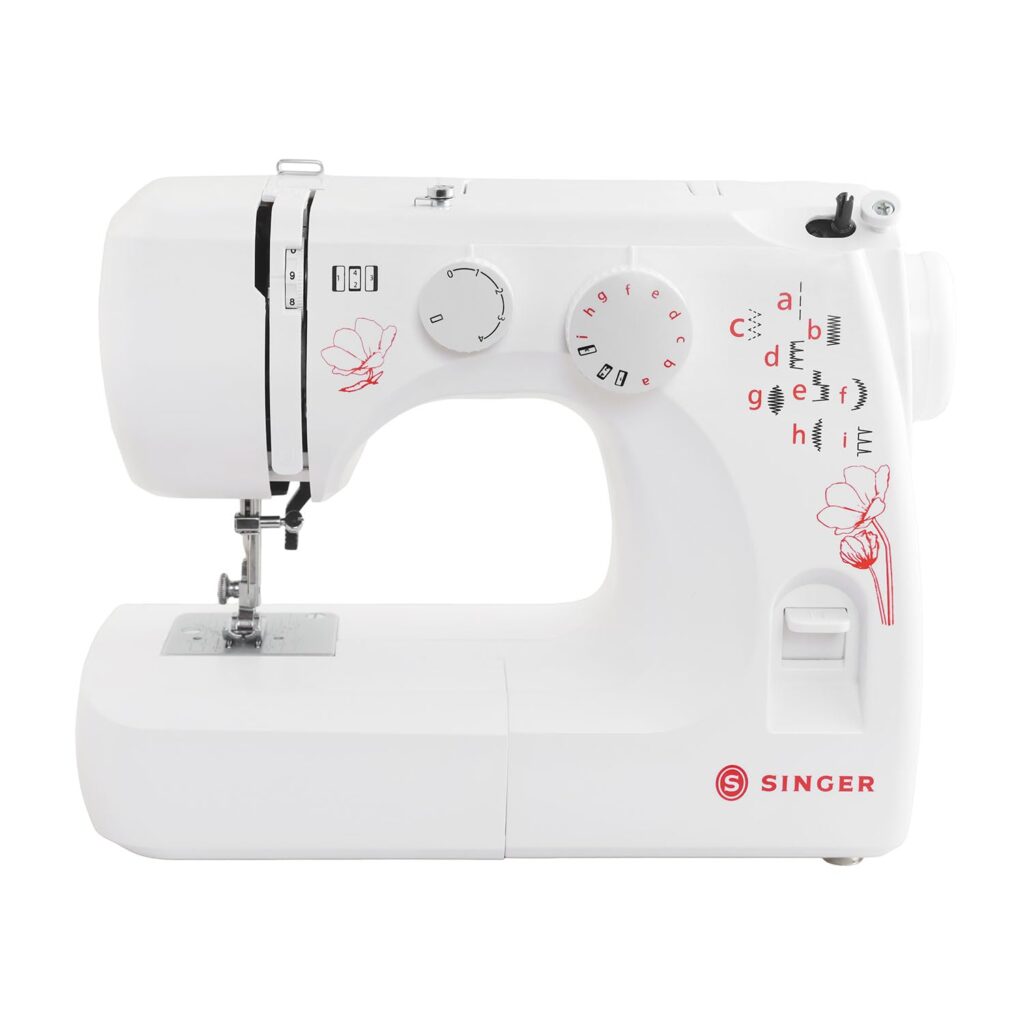
Finding a reliable sewing machine for home use can be confusing, especially when so many models promise easy stitching, powerful motors, and professional-looking results. Some machines are inexpensive but offer limited features, while others provide advanced functions that beginners may never need.
The SINGER 1310 Automatic Zig Zag Electric Sewing Machine offers a practical middle ground. With 10 built-in stitches, 22 stitch functions, a 60W motor, adjustable stitch length, a four-step buttonhole system, and a metal frame, it is designed for everyday stitching and home tailoring.
Whether you want to repair clothes, stitch kurtis, alter trousers, or make simple household items, this machine has several features worth considering.
But is the SINGER 1310 really suitable for beginners? Can it handle thick fabrics such as denim? And what do actual customer ratings reveal about its performance?
In this detailed SINGER 1310 sewing machine review, we examine its specifications, stitching capabilities, ease of use, advantages, limitations, customer feedback, and overall value in 2026.
Check the Latest SINGER 1310 Price and Offers on Amazon India.
SINGER 1310 Sewing Machine Overview
The SINGER 1310 is a mechanical electric sewing machine developed for domestic sewing, clothing alterations, and beginner-friendly tailoring projects.
Unlike traditional straight-stitch machines, it includes zig-zag and additional utility stitches, allowing users to complete different sewing tasks without purchasing separate equipment.
Main Specifications
- Brand: SINGER
- Model: 1310
- Machine type: Automatic zig-zag electric sewing machine
- Built-in stitches: 10
- Stitch functions: 22
- Motor power: 60W
- Buttonhole function: Four-step buttonhole
- Stitch length: Adjustable up to 4mm
- Lighting: Built-in LED
- Frame: Heavy-duty metal frame
- Free-arm sewing: Yes
- Bobbin winding: Automatic
- Reverse stitching: Supported
- Warranty: Two years, subject to applicable conditions
- Primary applications: Home sewing, alterations, garment construction, and basic decorative stitching
The SINGER 1310 focuses on features that most home users can realistically benefit from.
Although it does not offer the extensive stitch libraries found on computerized machines, its basic functions are suitable for learning and completing many everyday sewing tasks.
An important distinction is that the machine’s 22 stitch functions do not represent 22 completely separate stitch patterns. It offers 10 built-in stitches that support various applications.
For beginners, this simpler approach can be an advantage.
Key Features of the SINGER 1310 Sewing Machine
1. Ten Built-In Stitches for Everyday Sewing
The SINGER 1310 offers 10 built-in stitches intended for common sewing activities.
Straight stitching is useful for joining fabric pieces, repairing seams, shortening garments, and constructing simple clothing.
Zig-zag stitching provides additional flexibility for selected fabric-edge finishes, appliqué, and stitching projects where straight seams alone are insufficient.
Other utility stitch functions expand the machine’s usefulness for different household applications.
For example, when stitching a simple cotton kurti, you can use straight stitching to join the main fabric sections and appropriate zig-zag stitching for certain edge-finishing tasks.
The available stitch variety also allows beginners to learn techniques beyond ordinary straight seams.
However, having more stitch options does not automatically guarantee better results. Proper thread tension, needle selection, fabric handling, and practice remain essential.
2. Twenty-Two Stitch Functions
The machine advertises 22 stitch functions, giving users flexibility for different sewing applications.
These functions are especially useful for people who want to develop their sewing skills over time.
Someone may initially purchase the machine for repairing clothes and later begin making pillowcases, children’s garments, fabric bags, or decorative household accessories.
Having additional stitching options can make that transition easier.
Nevertheless, buyers should not confuse stitch functions with individual decorative patterns.
For users interested primarily in elaborate embroidery or highly decorative clothing, a more specialised machine may be appropriate.
The SINGER 1310 is best understood as a general-purpose domestic sewing machine rather than a dedicated embroidery system.
3. Powerful 60W Electric Motor
The SINGER 1310 includes a 60-watt electric motor.
Its motor is intended to power routine domestic stitching, reducing the physical effort associated with traditional hand-operated machines.
For ordinary cotton clothing, polyester blends, and basic alterations, the motor specification fits the machine’s intended applications.
However, motor wattage alone cannot determine sewing strength.
The actual ability to handle a particular fabric depends on several factors, including needle condition, fabric thickness, thread type, feed mechanism, and the number of layers being stitched.
Buyers should avoid assuming that a 60W motor guarantees reliable performance with thick leather, upholstery, or multiple layers of denim.
4. Heavy-Duty Metal Frame
One of the advertised construction features of the SINGER 1310 is its heavy-duty metal frame.
An internal metal structure is intended to provide stability and support the machine’s sewing mechanisms.
This can be beneficial during longer stitching sessions because a stable machine is generally easier to work with.
The frame may also make the machine feel more substantial than very lightweight portable alternatives.
However, the phrase heavy-duty metal frame should not be interpreted as proof of industrial-grade performance.
The SINGER 1310 remains a domestic sewing machine.
Its long-term durability will depend on proper maintenance, operating conditions, manufacturing quality, and the type of work performed.
5. Four-Step Buttonhole Function
Buttonholes are necessary for many garments, including shirts, dresses, kurtis, and children’s clothing.
The SINGER 1310 includes a four-step buttonhole system.
Instead of creating an entire buttonhole through one automatic operation, the user completes the process in four stages.
This provides useful garment-making capability without requiring a separate machine.
However, beginners should expect a learning curve.
Accurate buttonholes require correct positioning, appropriate stitch density, and suitable fabric preparation.
Practising on spare material before working on a finished garment can prevent mistakes.
6. Adjustable Stitch Length
The machine provides adjustable stitch length up to 4mm.
This helps users select settings appropriate for different projects.
Shorter stitches may be useful for certain detailed seams, while longer stitches can be appropriate for selected construction or temporary stitching tasks.
Adjustment is particularly important because fabric types do not all respond the same way.
For example, settings suitable for medium-weight cotton may not be ideal for lightweight polyester.
Beginners should start with the recommended settings in the instruction manual and experiment gradually.
7. Free-Arm Sewing
Free-arm capability is one of the SINGER 1310’s most practical features for home tailoring.
It helps users sew around narrow, tubular garment sections.
Common applications include:
- Altering trouser hems
- Repairing shirt sleeves
- Stitching cuffs
- Working on children’s clothing
- Sewing narrow garment openings
Without a free arm, certain alterations require more careful fabric positioning.
For households where clothing repairs are frequent, this feature can be more useful than additional decorative stitches.
8. LED Light and Automatic Bobbin Winding
The built-in LED light illuminates the sewing area, improving visibility around the needle.
This is particularly convenient when working with dark-coloured garments or small seam allowances.
Automatic bobbin winding simplifies the process of preparing lower thread.
The machine also supports reverse stitching, which helps reinforce seam beginnings and endings.
These are relatively simple features, but they contribute to everyday convenience.
Interested in checking the latest selling price?
View the SINGER 1310 Sewing Machine on Amazon India.
SINGER 1310 Stitching Performance: How Well Does It Handle Fabrics?
A sewing machine’s usefulness depends on how comfortably it handles your preferred fabrics.
The SINGER 1310 offers suitable functions for ordinary domestic sewing, although its specifications alone cannot guarantee flawless stitching on every material.
The following assessment considers its advertised features and intended applications rather than claiming independent hands-on testing.
Cotton Fabric
Cotton is a sensible starting fabric for this machine.
Medium-weight cotton is generally easier to control than slippery or highly elastic materials.
The SINGER 1310 offers the basic stitching functions needed for cotton kurtis, pillowcases, simple garments, and ordinary clothing repairs.
Beginners can practise straight seams, corners, and hems before attempting more complicated projects.
Using an appropriate needle and quality thread can help improve stitch consistency.
Polyester and Blended Fabrics
Polyester and cotton-polyester blends are common in shirts, uniforms, dresses, and household textiles.
The SINGER 1310 is a reasonable candidate for stitching these materials.
However, some synthetic fabrics are slippery or prone to puckering.
Correct tension, suitable needles, and careful fabric handling are important.
Avoid pulling the fabric through the machine, as this can interfere with feeding and may damage the needle.
Denim and Thicker Fabrics
Many buyers want to know whether the SINGER 1310 can stitch jeans.
It may be suitable for minor alterations involving certain denim materials when an appropriate needle is used.
However, stitching one layer of denim is different from sewing across multiple thick layers near a jeans waistband.
SINGER’s general guidance for similar domestic machines recommends light- to medium-weight fabrics and only minor alterations involving heavier materials.
Therefore, buyers planning regular heavy denim stitching should consider a specialised heavy-duty machine.
The SINGER 1310 should not be purchased with the expectation that it will perform like industrial tailoring equipment.
Stretch Fabrics and Knits
Zig-zag stitching can accommodate some fabric movement, making it useful for selected stretch-fabric applications.
This can help with simple repairs involving elastic or knitted materials.
However, stretch fabrics often require appropriate needles and careful tension adjustment.
For frequent T-shirt construction or professional knitwear finishing, a dedicated overlocker may provide better results.
Delicate Fabrics
Lightweight cotton, chiffon, and fine synthetic fabrics require greater care.
These materials can become damaged or gather unevenly if the needle and stitch settings are unsuitable.
Use appropriate fine needles and test the machine on fabric scraps before stitching the actual garment.
The SINGER 1310’s adjustable controls are useful, but technique remains essential.
Overall, the machine is best suited to common domestic fabrics and ordinary household sewing projects.
Ease of Use: Is the SINGER 1310 Good for Beginners?
The SINGER 1310 is a reasonable choice for beginners who want to learn practical sewing skills.
Its mechanical controls provide access to useful functions without requiring complicated computerized menus.
Learning the Basic Controls
New users should begin by understanding upper threading, bobbin preparation, needle installation, and stitch selection.
Start with straight stitching on cotton fabric.
Once comfortable, practise zig-zag stitching, reverse stitching, and adjusting stitch length.
Buttonholes and more detailed techniques can be introduced later.
Learning gradually reduces frustration and makes it easier to identify the cause of stitching problems.
Everyday Clothing Alterations
The machine offers useful features for shortening garments, repairing torn seams, stitching simple hems, and making selected adjustments.
Its free-arm capability helps when working on sleeves and trouser legs.
For someone learning home tailoring, the SINGER 1310 provides a practical starting point.
However, accurate measuring, cutting, pressing, and garment-fitting skills are just as important as the machine itself.
Maintenance and Cleaning
Regular maintenance can help preserve sewing performance.
Remove accumulated lint according to the instruction manual, replace damaged needles, and keep the machine protected from dust and moisture.
Use the correct bobbins, needles, and thread.
Follow the manufacturer’s instructions regarding lubrication rather than applying oil indiscriminately.
Disconnect the machine from electricity before performing routine cleaning or maintenance.
SINGER 1310 Pros and Cons
Advantages
- 10 built-in stitches for basic and selected decorative sewing.
- 22 stitch functions supporting different household tasks.
- 60W motor intended for domestic electric sewing.
- Metal frame designed to support structural stability.
- Adjustable stitch length for greater control.
- Four-step buttonholes for garment construction.
- Free-arm sewing for sleeves, cuffs, and trousers.
- LED light for improved visibility.
- Automatic bobbin winding for convenient preparation.
- Two-year warranty under applicable manufacturer terms.
Disadvantages
- Limited decorative stitch variety compared with advanced machines.
- Four-step buttonholes require more practice than one-step systems.
- Not an industrial sewing machine despite the metal frame.
- Heavy denim performance is limited by its domestic design.
- Beginners must learn threading and tension adjustment.
- No confirmed automatic needle threader, so buyers should not assume it is included.
- Not a replacement for an overlocker when professional knitwear finishing is required.
SINGER 1310 Customer Reviews: What Do Buyers Say?
Customer ratings provide useful context when evaluating a sewing machine.
A recent marketplace product-data snapshot for Amazon ASIN B0H3NZ4TRV displayed approximately 4.4 out of 5 stars from 8,854 ratings.
A separate September 2026 shopping-market survey also recorded an average around 4.4 stars from 8,830 ratings for the SINGER 1310.
These figures suggest generally positive customer sentiment.
However, aggregate ratings do not explain which specific features customers liked or disliked, and ratings may sometimes be pooled across product variants.
Positive Customer Feedback
A recent verified-buyer review displayed on Flipkart’s sewing-machine listings specifically mentioned the SINGER FM 1310.
The customer described the machine as working smoothly and expressed satisfaction with the purchase, while hoping its performance would continue over time.
This is encouraging feedback regarding initial operation.
However, one positive owner comment cannot establish long-term reliability.
The broader Amazon rating average also suggests that many customers were satisfied enough to provide positive ratings, but individual written Amazon reviews for this exact ASIN were not independently accessible during this assessment.
Common Complaints and Limitations
It would be misleading to claim that buyers repeatedly complained about a particular mechanical defect without verifying the underlying written reviews.
For this reason, no unconfirmed defect pattern should be attributed to the SINGER 1310.
Nevertheless, there are several areas buyers should investigate when reading the latest reviews.
Thread breakage and skipped stitches: Check whether reviewers describe persistent problems after correct needle installation and threading.
Bobbin operation: Look for detailed experiences with bobbin winding, insertion, and thread feeding.
Customer demonstrations: Some customer feedback on related SINGER models has raised concerns about demonstration availability. This should not be treated as a confirmed complaint about the exact 1310 listing, but it is worth checking locally.
Thick-fabric performance: Look for reviews describing specific projects, especially denim hems and layered seams.
Delivery and accessories: Check whether buyers received the expected components in good condition.
Should You Trust the Ratings?
An average of approximately 4.4 stars across thousands of ratings is encouraging, but it should not be the only deciding factor.
Detailed reviews describing actual sewing projects are more useful than short comments without context.
Also check whether the review refers specifically to the SINGER 1310 rather than another variant grouped under the same marketplace listing.
Want to examine the latest customer experiences?
Read SINGER 1310 Customer Reviews on Amazon India.
Who Should Buy the SINGER 1310 Sewing Machine?
Beginners Learning Sewing
The SINGER 1310 is a practical option for beginners who want more functionality than basic straight stitching.
Its stitch selection and domestic design allow users to learn ordinary garment construction and repairs.
Homemakers
People who regularly shorten trousers, repair garments, stitch pillowcases, or work on household fabric projects may find its features useful.
The free arm and reverse stitching functionality are particularly relevant.
Home Tailoring Learners
Anyone learning to stitch simple kurtis, blouses, children’s clothing, and everyday garments may benefit from the machine.
It offers enough basic stitch options to practise essential techniques.
Hobby Sewers
The machine is also suitable for people interested in simple DIY sewing projects and fabric accessories.
However, hobbyists focused on advanced embroidery may prefer a specialised machine.
Who Should Consider Another Model?
Professional tailors requiring continuous commercial operation should consider industrial equipment.
People planning frequent leatherwork, upholstery, or heavy denim stitching should also choose a machine specifically designed for those applications.
SINGER 1310 Price and Value for Money
A marketplace product-data snapshot listed the SINGER 1310 at approximately ₹9,990, while a separate September 28, 2026 market survey recorded a price of ₹11,320.
This difference illustrates why buyers should verify the current selling price rather than relying on an older discount.
At around ₹10,000, the machine offers a useful combination of utility stitches, an electric motor, a metal frame, free-arm sewing, and a two-year warranty.
Its value is strongest for households planning regular domestic sewing.
However, if you only need occasional straight stitching, a simpler machine may be more economical.
Buyers should also compare local service availability, warranty coverage, and customer feedback before making a final decision.
Frequently Asked Questions About the SINGER 1310
1. Is the SINGER 1310 suitable for beginners?
Yes. Its mechanical controls and useful built-in stitches make it a reasonable option for beginners. Learning threading, tension, and stitch selection still requires practice.
2. How many stitches does the SINGER 1310 have?
It offers 10 built-in stitches and 22 advertised stitch functions.
3. Can the SINGER 1310 stitch jeans?
It may handle selected minor denim alterations with appropriate needles and settings, but it is not intended for continuous heavy denim stitching.
4. Is the SINGER 1310 suitable for kurti and blouse stitching?
Yes. Its straight and zig-zag stitching functions are suitable for many ordinary garment-construction tasks, depending on fabric and sewing technique.
5. Does the SINGER 1310 have a buttonhole function?
Yes. It offers a four-step buttonhole system that requires users to complete the stitching process in stages.
6. Does the SINGER 1310 have automatic needle threading?
An automatic needle threader is not confirmed in the verified specifications for this listing. Buyers should check the exact seller description before purchasing.
7. What is the motor power of the SINGER 1310?
The machine has an advertised 60W electric motor intended for normal domestic sewing applications.
8. Does the SINGER 1310 come with a warranty?
Yes. The machine is advertised with a two-year warranty, subject to applicable manufacturer conditions and exclusions.
Final Verdict: Is the SINGER 1310 Worth Buying in 2026?
The SINGER 1310 Automatic Zig Zag Electric Sewing Machine is a practical choice for people who want to learn sewing, handle household clothing repairs, and complete ordinary tailoring projects.
Its 10 built-in stitches, 22 stitch functions, 60W motor, free-arm design, adjustable stitch length, LED lighting, and metal frame provide a useful combination of domestic sewing features.
It is particularly appealing for beginners, homemakers, and hobbyists who need more flexibility than a straight-stitch-only machine.
The available aggregate customer ratings are encouraging, although detailed reviews specific to the exact Amazon listing should still be checked before purchase.
The main limitations are its modest decorative stitch range, four-step buttonhole system, and lack of verified heavy-duty fabric performance.
Overall, the SINGER 1310 is worth considering for regular home sewing and beginner tailoring, especially when its selling price is competitive.
It is not intended to replace a professional industrial machine, but it offers a sensible selection of features for everyday household use.
Ready to make your decision?
Check the Latest SINGER 1310 Price and Offers on Amazon India.